
Commercial Paver Projects
Walkways, patios, entrances, curbing, and parking surfaces for property managers, developers, and association boards.
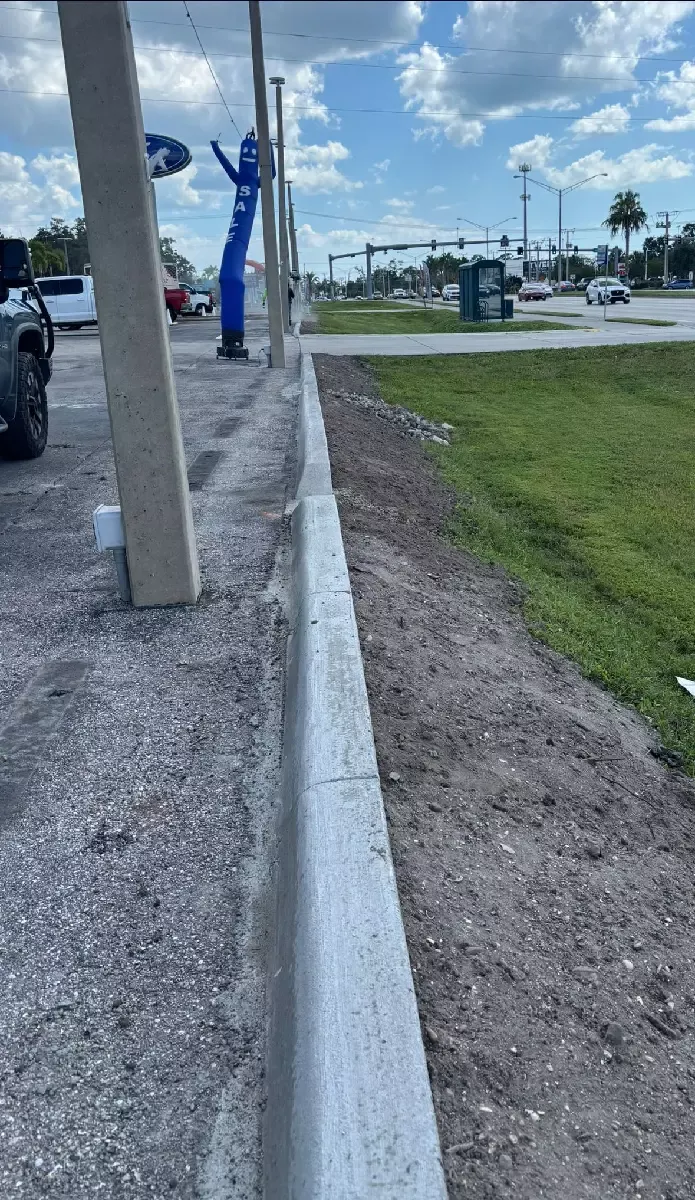
Curbing, footers, sign bases, and equipment pads. The concrete that holds something up or holds something in, done in the same visit as the rest of your project instead of waiting on a second contractor.
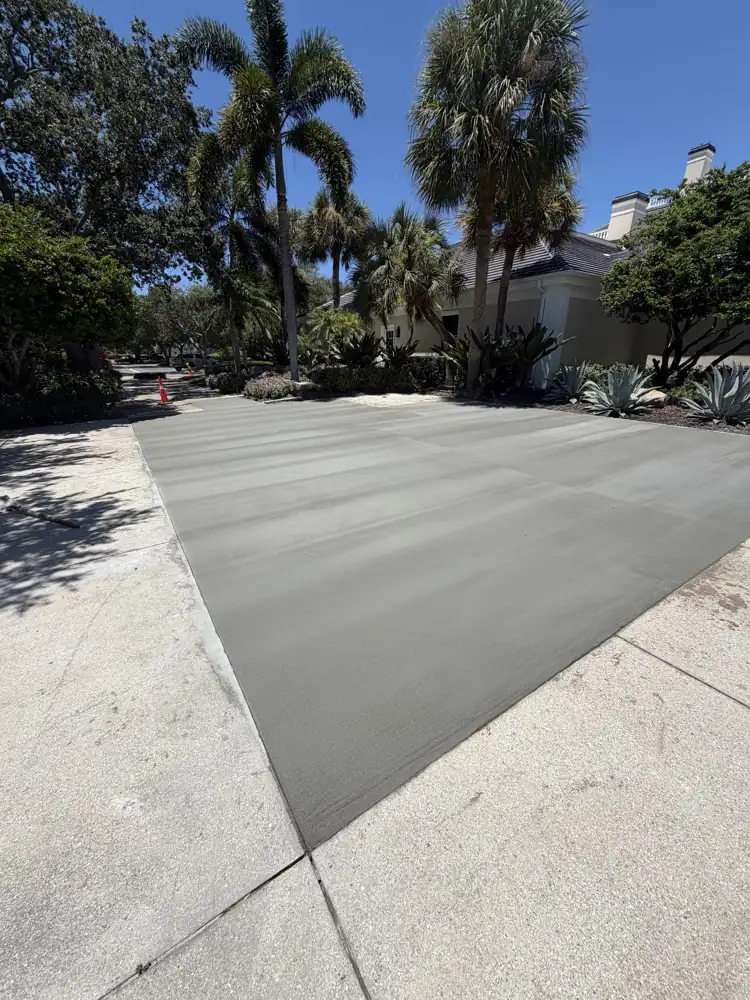
We do not pour driveways or patio slabs. The rest of this site argues that a paver field outperforms a slab on those surfaces, and selling you the opposite here would make one of those two positions dishonest.
What we do pour is the concrete a project needs to work: the curb that holds an edge, the footer under something upright, the pad under a piece of equipment. That work sits alongside a paver project rather than instead of one.
Send your address and what you need poured. Your on-site evaluation gets scheduled from there.
Most of what makes a small concrete job expensive is not the concrete. It is getting a crew and equipment to your property, setting up, and coming back. Do that once and the marginal cost of the pour is modest.
Which is why curbing, footers, and pads are worth raising at the evaluation for your paver project, even if they are not what you originally called about. If a bed edge or an AC pad is on your list for next year, it is usually cheaper this year.
Sequencing does matter. A pour that has to cure before a base can be compacted over it changes the order of the week, and that gets planned rather than discovered on site.
Book an evaluation and small concrete items get priced together with whatever else you are planning.
No. Concrete work here means curbing, footers, sign bases, and pads. For a driveway or a patio surface we build paver fields, because individual units can be lifted and reset while a slab cracks and stays cracked. It would be strange to argue that on one page and sell you the opposite on another.
A footer is the concrete base a structure sits on, spreading its load into the ground. Anything upright and permanent, a sign, a column, a lanai frame, a seat wall, needs one sized for what it carries. Undersized footers are why signs end up leaning.
Yes. Concrete curbing gives a bed a defined edge that holds its line and keeps mulch where it belongs. It is common alongside a paver project because the crew and the equipment are already there.
Yes. AC pads, generator pads, shed pads, and equipment pads are routine. The base preparation underneath is what keeps a pad from settling and putting a unit out of level, and that is the part that gets the attention.
Usually it should. Doing curbing, footers, or a pad in the same mobilization avoids a second setup and a second trip. Sequencing matters, and that gets planned rather than improvised.
Yes, and it is a regular part of paver projects where an old slab has to come out before a proper base can go in. Removal and disposal get priced as part of the scope rather than appearing later.
A 2-year warranty covering settling and structural issues. If a warranty repair is completed, the warranty period resets.
The commercial projects it most often supports, the paver surfaces it sits beside, and the grading that comes first.
Walkways, patios, entrances, curbing, and parking surfaces for property managers, developers, and association boards.
The base system, the process, and the warranty behind every surface we build. Start here if you want to know how the work is actually done.
Where the water goes. Standing water, a lot that slopes the wrong way, and the grading that has to happen before any surface goes down.
Send your address and what you need poured, whether that is curbing, a footer, a sign base, or a pad. Requests get a response within one business day.