
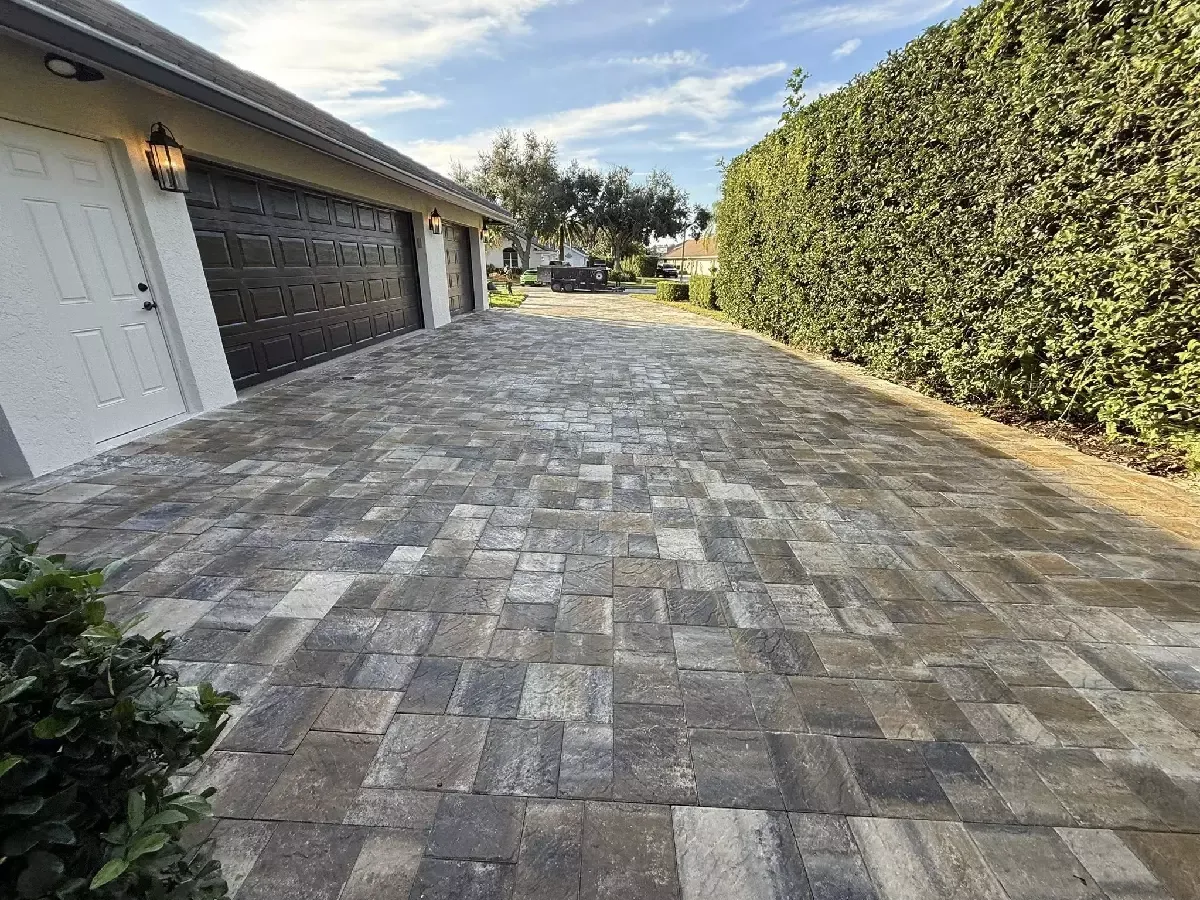
Multi-size gray field with a dark border, Sarasota
The one surface on your property that takes vehicle weight every day, and the one people see first. Width, turning radius, pattern, and edge restraint decide whether it still looks right in ten years or starts drifting in two.
A patio carries furniture and people. A driveway carries a few thousand pounds that accelerates, brakes, and turns in the same three spots every single day. Those loads concentrate at the apron, at the garage, and wherever you swing the wheel.
Which is why driveway problems show up as a dropped strip near the garage, a spreading edge along one side, or a low spot exactly where the tires track. None of those are paver failures. They are base and edge restraint failures.
Send your address, rough dimensions, and what parks on it. Your on-site evaluation gets scheduled from there.
These are the choices that change how the finished driveway looks and lives.
Most driveway projects here start with removing something. An original slab has usually cracked along the same lines for years, and the cracks are telling you what the ground underneath has been doing.
Concrete pavers are individual units that interlock into a stable surface. They distribute weight across multiple points and tolerate movement without cracking, and units expand and contract independently. A slab has no way to absorb that, so it cracks and stays cracked.
The other practical difference arrives years later. When a utility line needs attention or one section settles, pavers get lifted and reset. A slab gets saw cut, broken out, repoured, and never quite matches again.
Multi-size gray field with a dark border, Sarasota
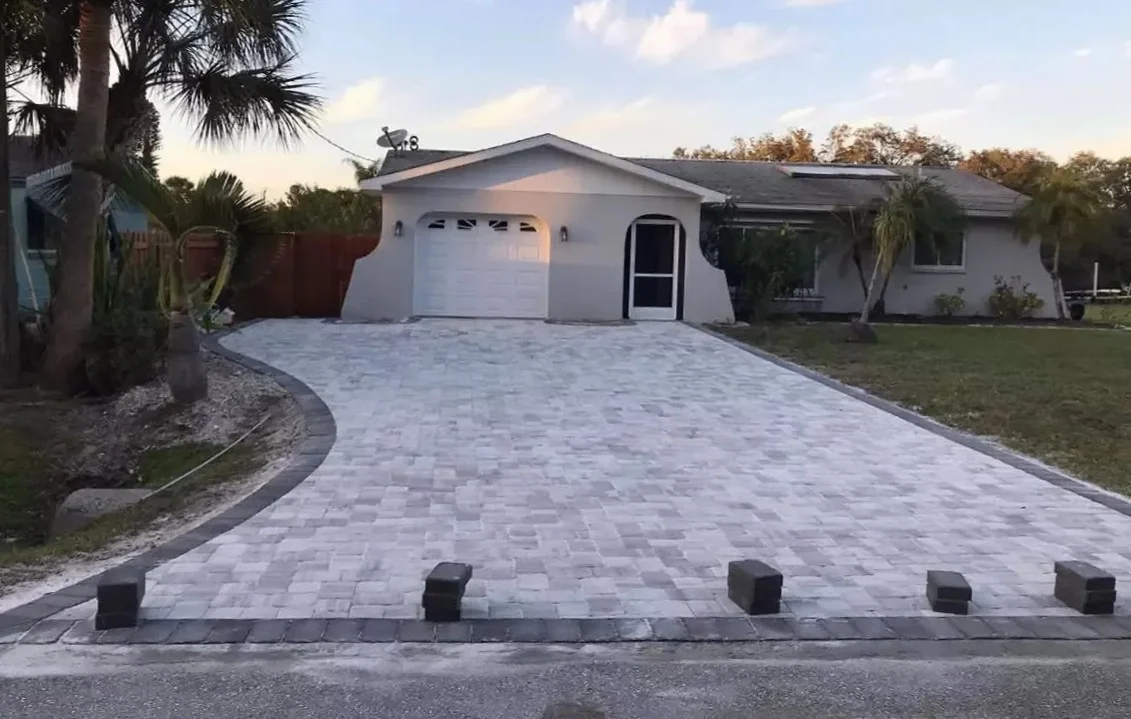
Curved Driftwood paver driveway, Nokomis
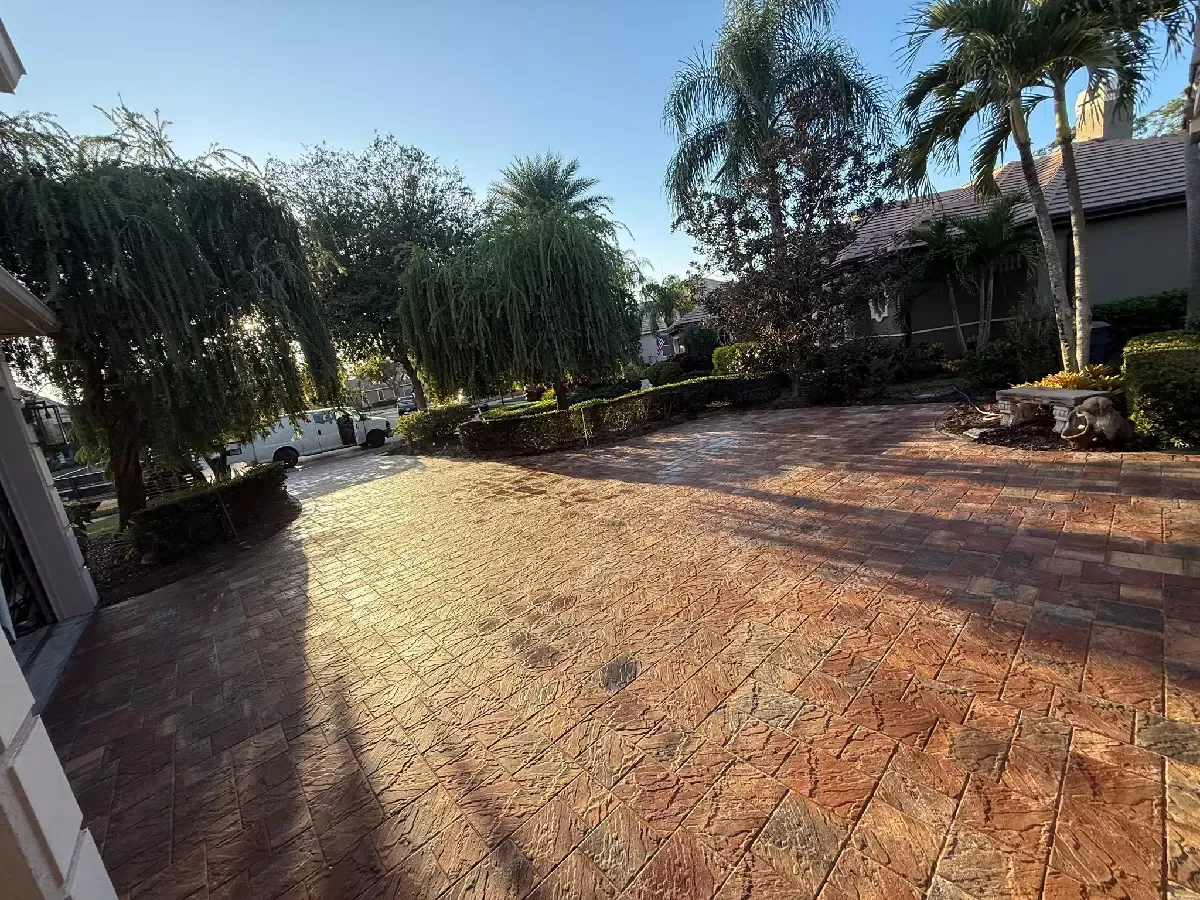
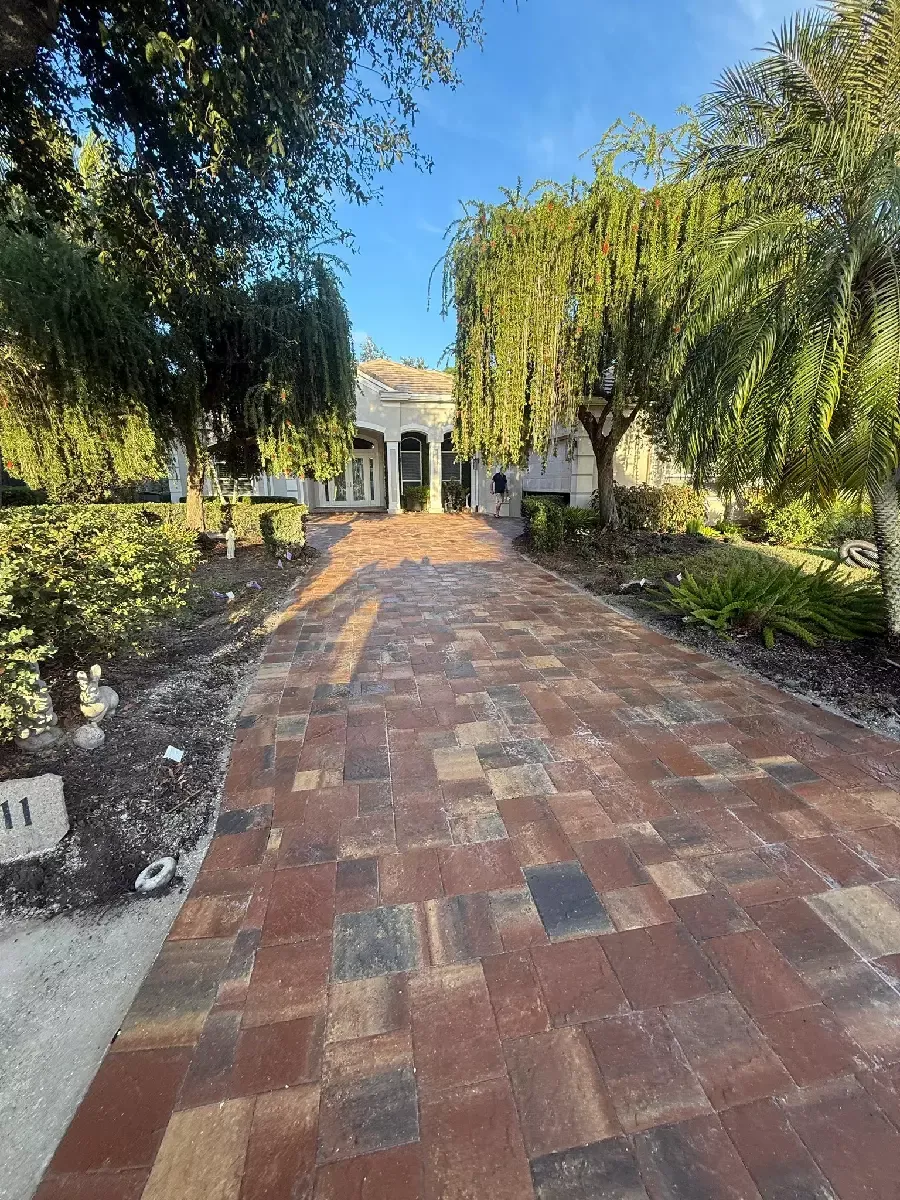
Brick-style field on an established lot, Bradenton
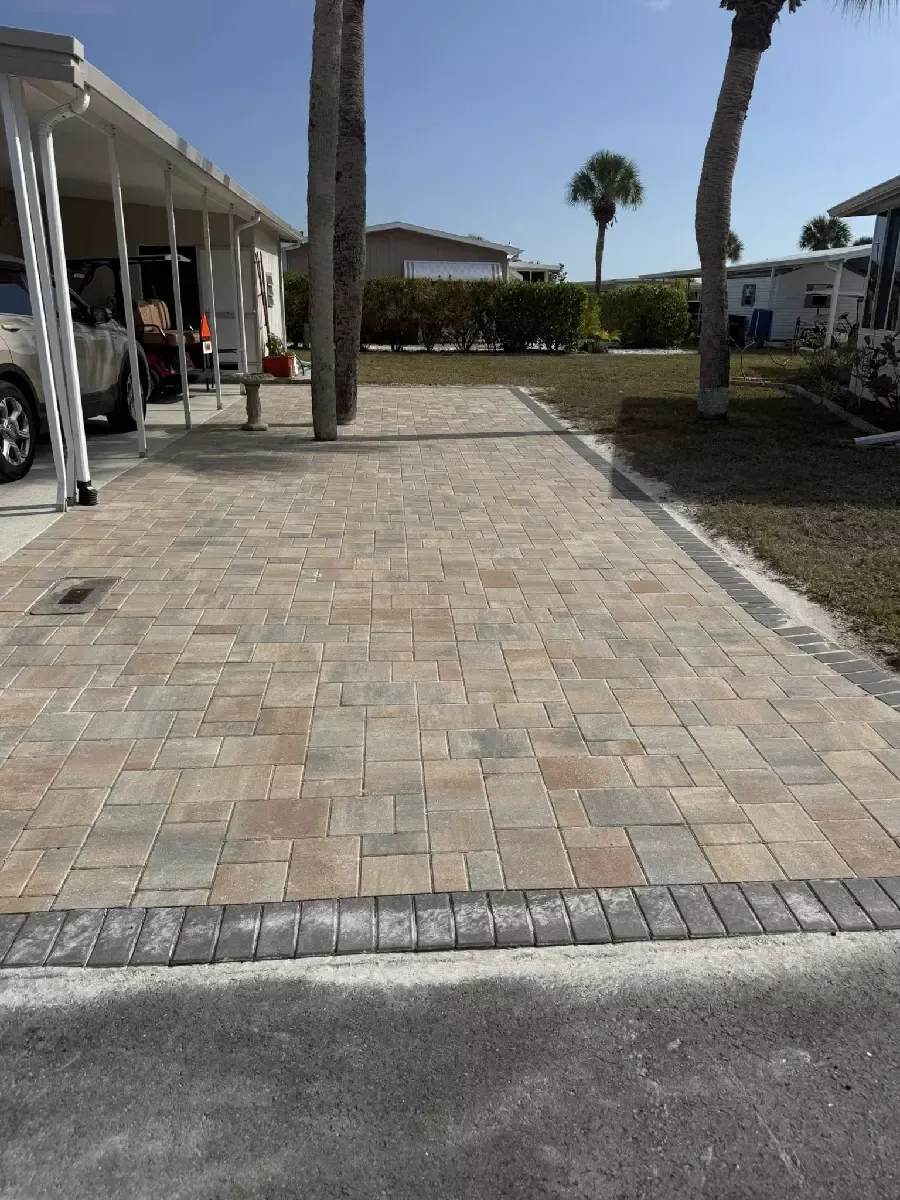
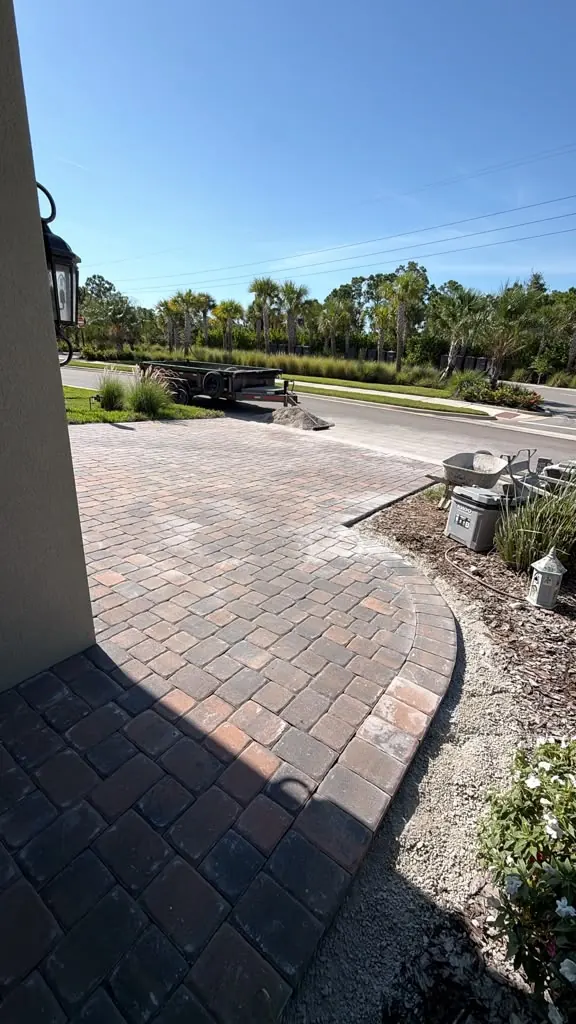
Paver surface continued under a carport, Venice
Nothing gets quoted before someone stands on it. Schedule an evaluation and you get a number that reflects your actual driveway.
Yes, when the base is built for it. Base depth is adjusted as needed for specific site conditions and load requirements, so a driveway that parks an RV or takes delivery vehicles gets evaluated differently than one that holds two cars. Tell us what will actually sit on it.
Generally yes. Laying over a slab means the new surface inherits whatever the slab does next, and a cracked slab keeps moving. Removing it and building a proper compacted base costs more at the start and is what decides how the driveway performs in five years. If you are still weighing the two surfaces, read our comparison of pavers vs. concrete driveways in Venice.
The apron crosses into public right of way, which is a different jurisdiction than your property and often a separate approval. Permitting is handled as part of project management, and your site evaluation covers what your specific address and municipality require. There is more detail in our guide to paver permits and HOA rules in Sarasota County.
Not with edge restraint installed correctly. Edge restraint locks the paver field in place and holds surface integrity under load. Without it, pavers gradually spread apart and the surface loses stability, and a driveway sees more of that force than any other surface on the property because of turning.
A single is usually around 10 to 12 feet and a double around 18 to 20, but the number that matters more is turning radius at the garage and at the street. Backing out of a tight apron every day is the thing people regret, and it is cheap to solve on paper and expensive to solve later.
Herringbone interlocks most effectively under turning and braking loads, which is why it is common on driveways. Running bond and basketweave read calmer and suit some architecture better. A contrasting soldier course around the perimeter is what makes the finished edge look deliberate.
They mark it, and on a paver surface that is a much smaller problem than on a slab. A stained unit can be lifted and swapped with one from a less visible area. Sealing also makes routine cleanup easier, though it is an appearance decision rather than a structural one.
A 2-year warranty covering settling and structural issues. If a warranty repair is completed, the warranty period resets.
How the base system works, what to do if yours has already settled, and the surface that usually gets done alongside it.
The base system, the process, and the warranty behind every surface we build. Start here if you want to know how the work is actually done.
Sunken sections, drifting edges, and standing water corrected at the cause, so you keep the surface you already paid for.
Width, curves, and how a path meets the front door. The smallest projects, and the ones people look at most.
Send your address, rough dimensions, and what parks on it. Requests get a response within one business day.