
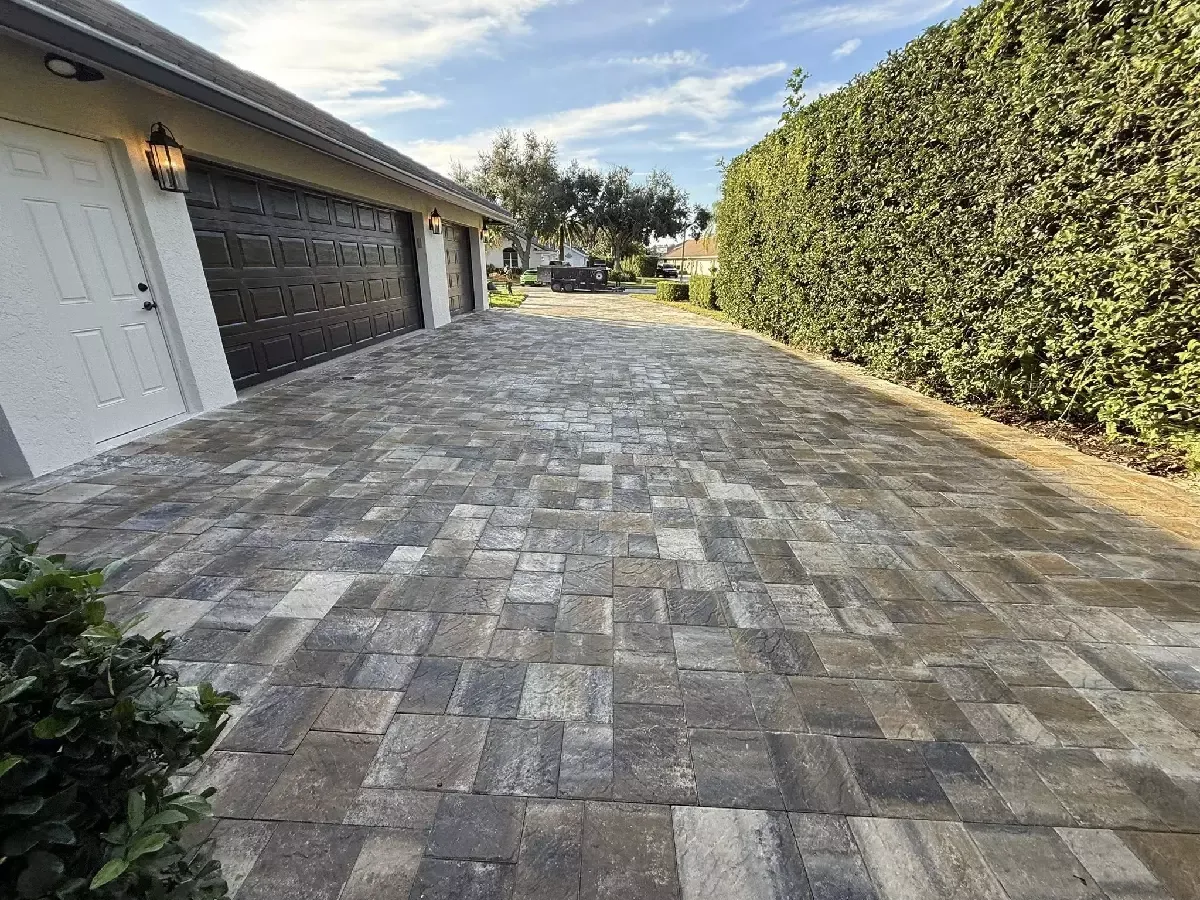
Paver Driveways
Vehicle loads, turning radius, and the apron transition decide whether a driveway holds its line. Design, patterns, and what moves the price.
New driveways, patios, pool decks, walkways, and commercial surfaces, built on a compacted base sand system sized for your site. Your grade and drainage get worked out before the first paver is set, which is what decides how the surface performs five years from now.
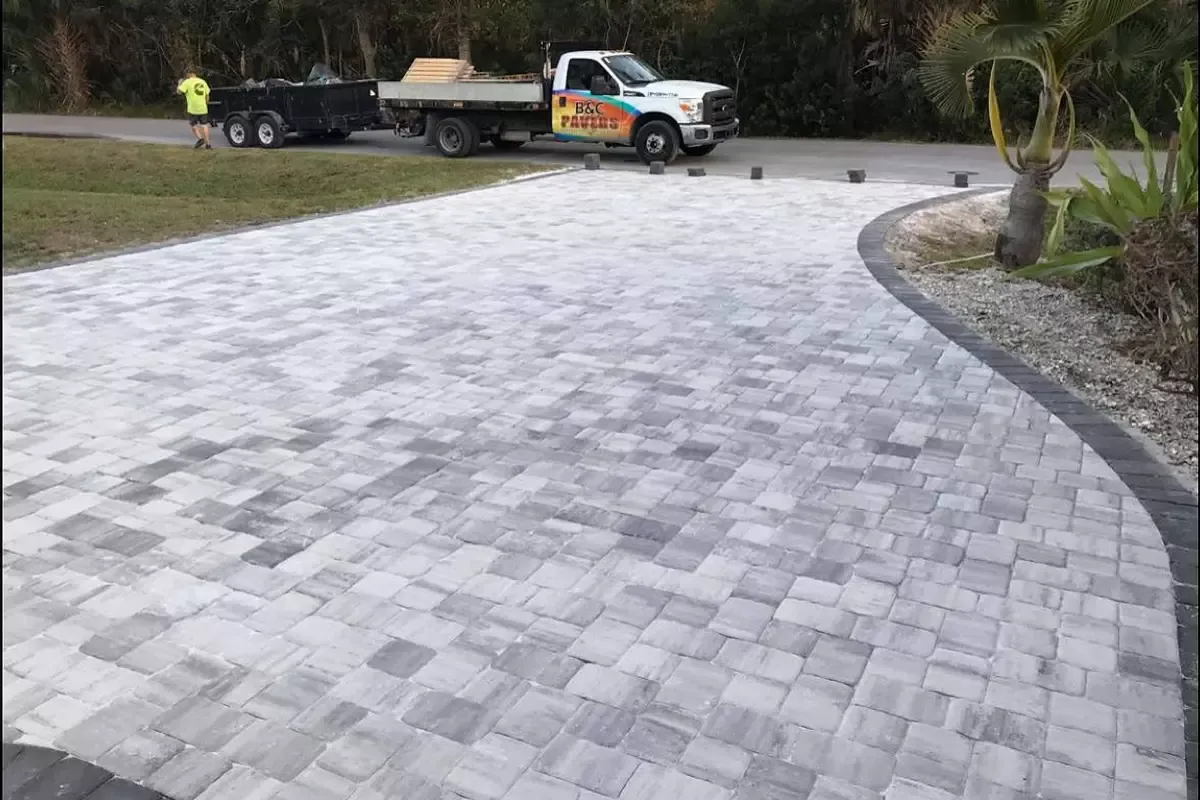
Improper installation shows up as early settling, shifting edges, drainage problems, and uneven surfaces. In coastal Florida, heavy rainfall and soil movement make those outcomes more likely when preparation is not handled correctly.
Getting grading, base preparation, and edge restraint right during installation is what prevents your repair bill later. That is the entire argument for spending time on your property before the work starts.
Tell us what you are planning and we will schedule an on-site evaluation.
Every surface below is built on the base system described on this page. What changes is load, traffic, access, and the design decisions that matter for that surface. Each one has its own page covering those in detail.
Vehicle loads, turning radius, and the apron transition decide whether a driveway holds its line. Design, patterns, and what moves the price.
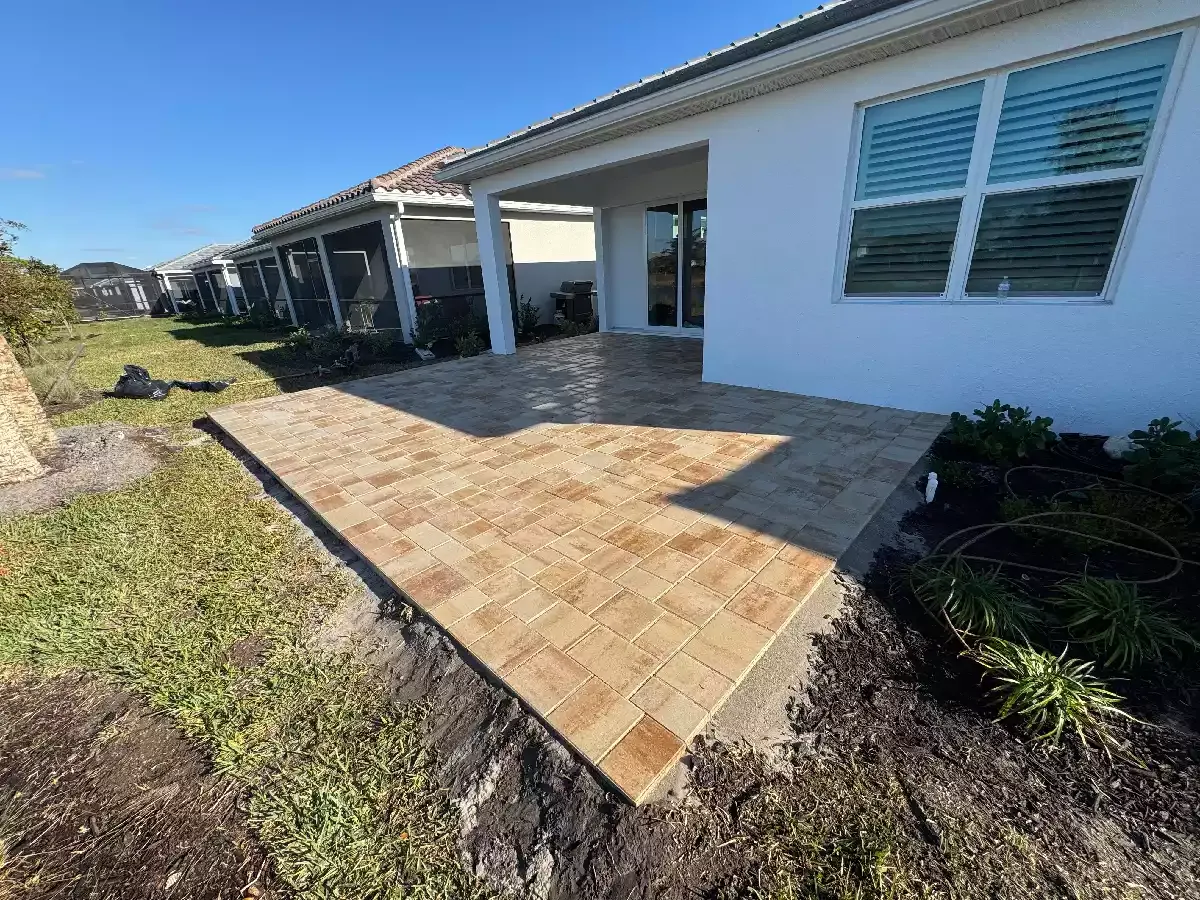
Sizing the space around real furniture, tying it to the house, and getting the threshold transition right so the patio does not sit a step off.
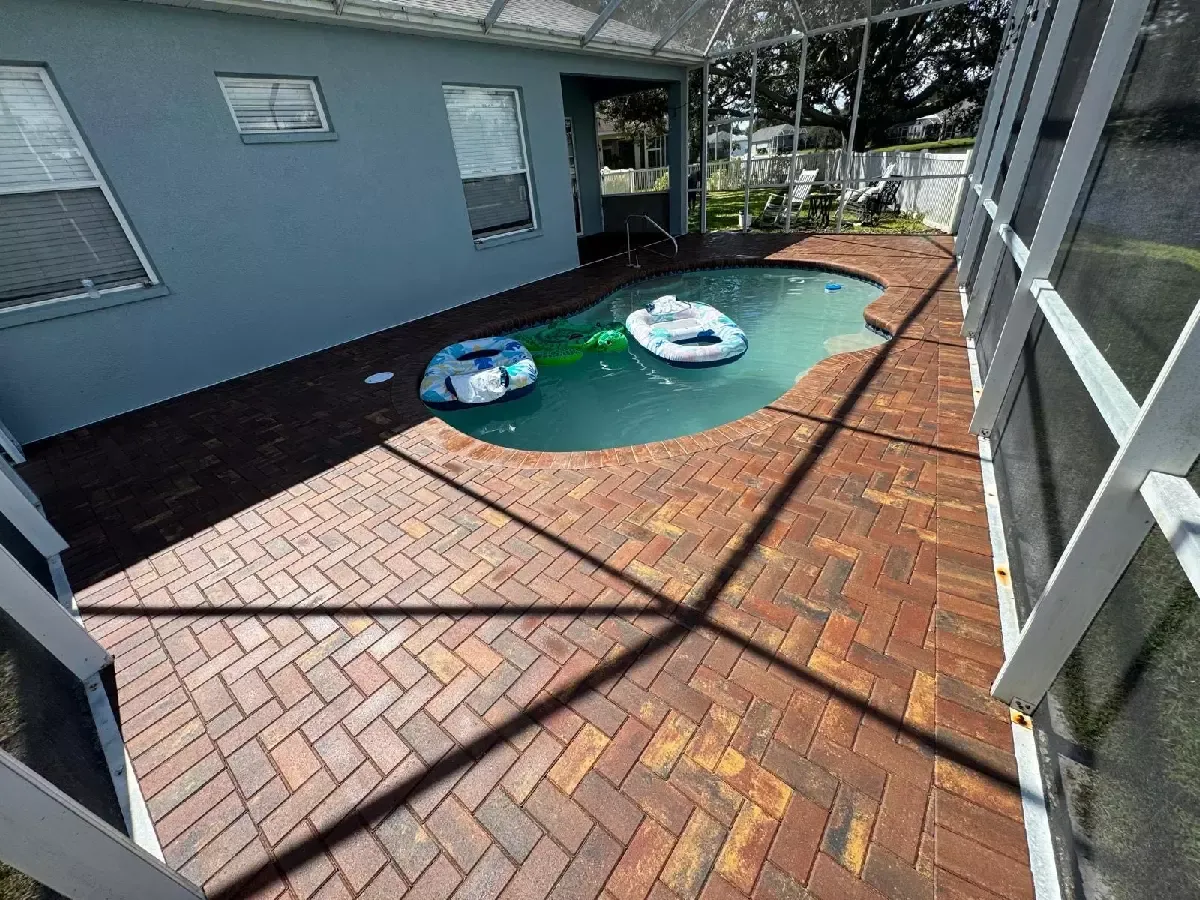
Bare feet, constant moisture, and full sun. Surface texture, color and heat, coping, and drainage away from the house.
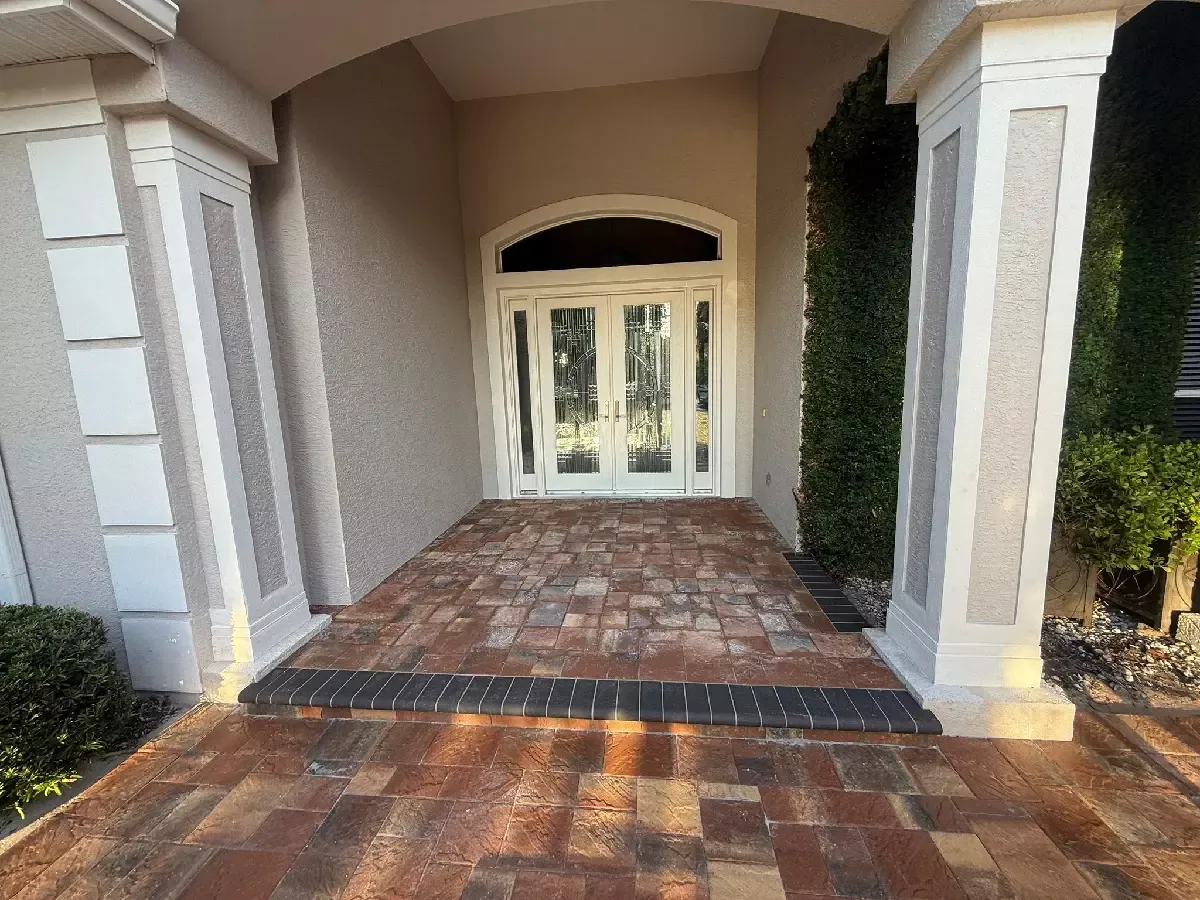
Width, curves, and how a path meets the front door. The smallest projects, and the ones people look at most.
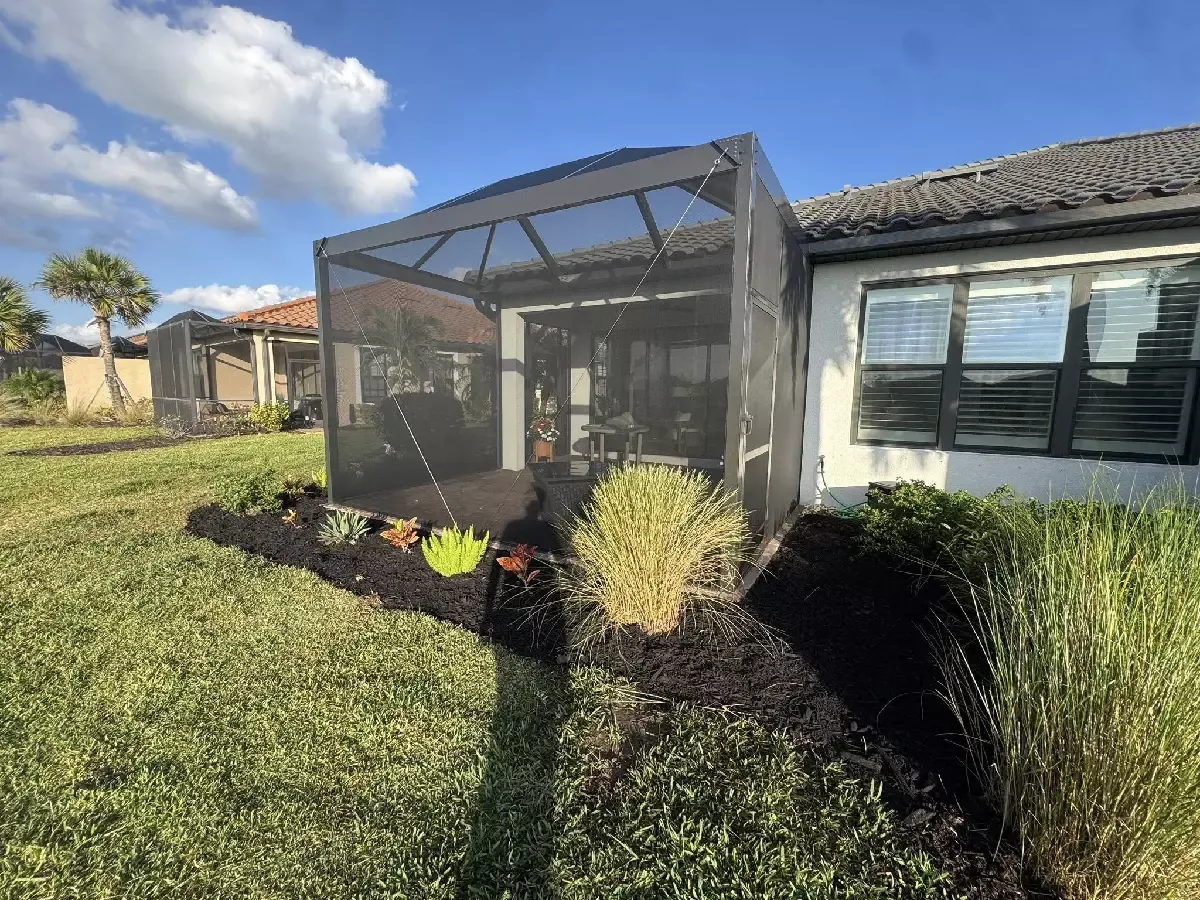
Extending the covered space or replacing the floor inside a screened enclosure, where cutting accuracy at the track is what shows.
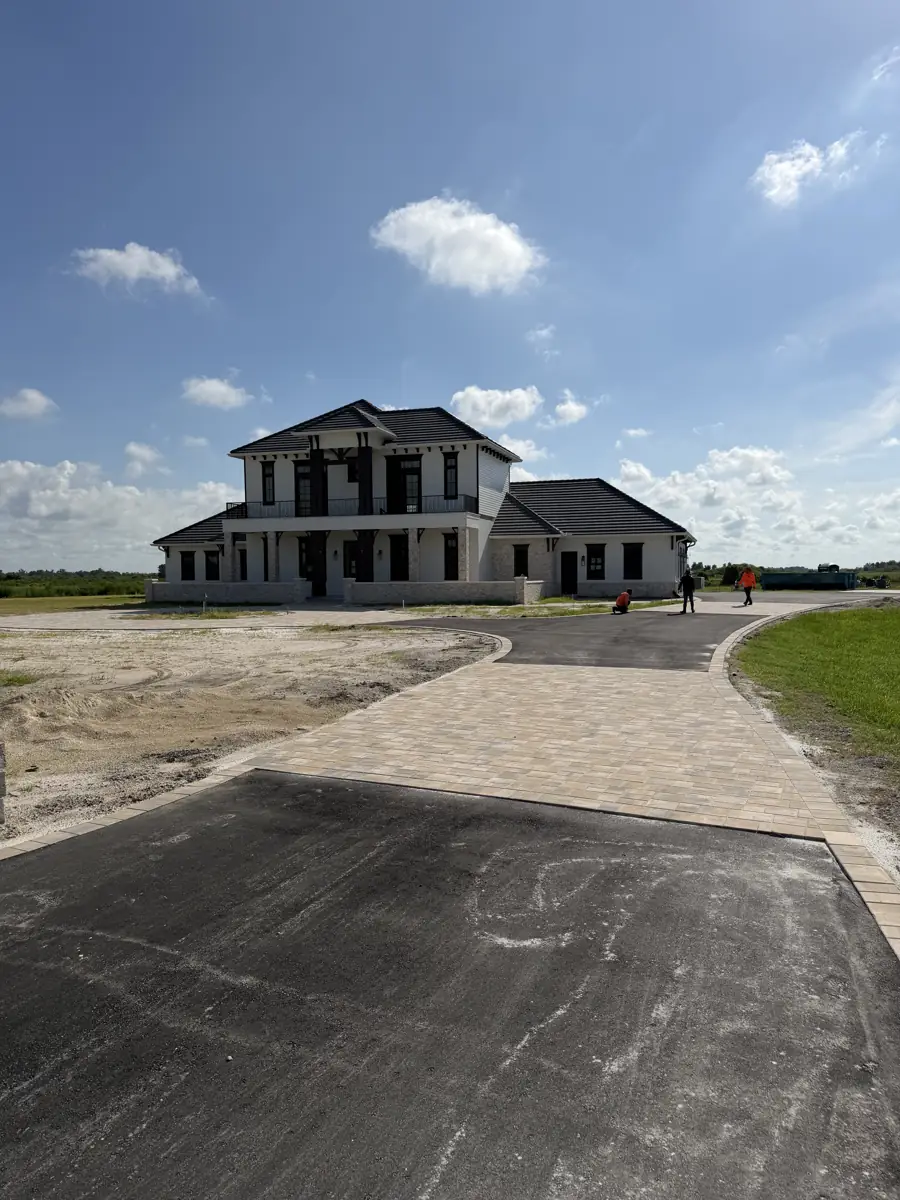
Walkways, patios, entrances, curbing, and parking surfaces for property managers, developers, and association boards.
Residential installations often center on custom patterns, color matching to the house, and how the family actually uses the space. Commercial projects lean toward durability, maintenance efficiency, and accessible transitions.
What does not change is the preparation. Your project gets the same base system, the same edge restraint, and the same walkthrough at the end, whether it is a back patio or a parking area.
Concrete pavers are individual units that interlock into a stable surface. Unlike poured concrete or asphalt, they distribute weight across multiple points and tolerate movement without cracking. Units expand and contract independently and can be lifted and reset without disturbing what surrounds them.
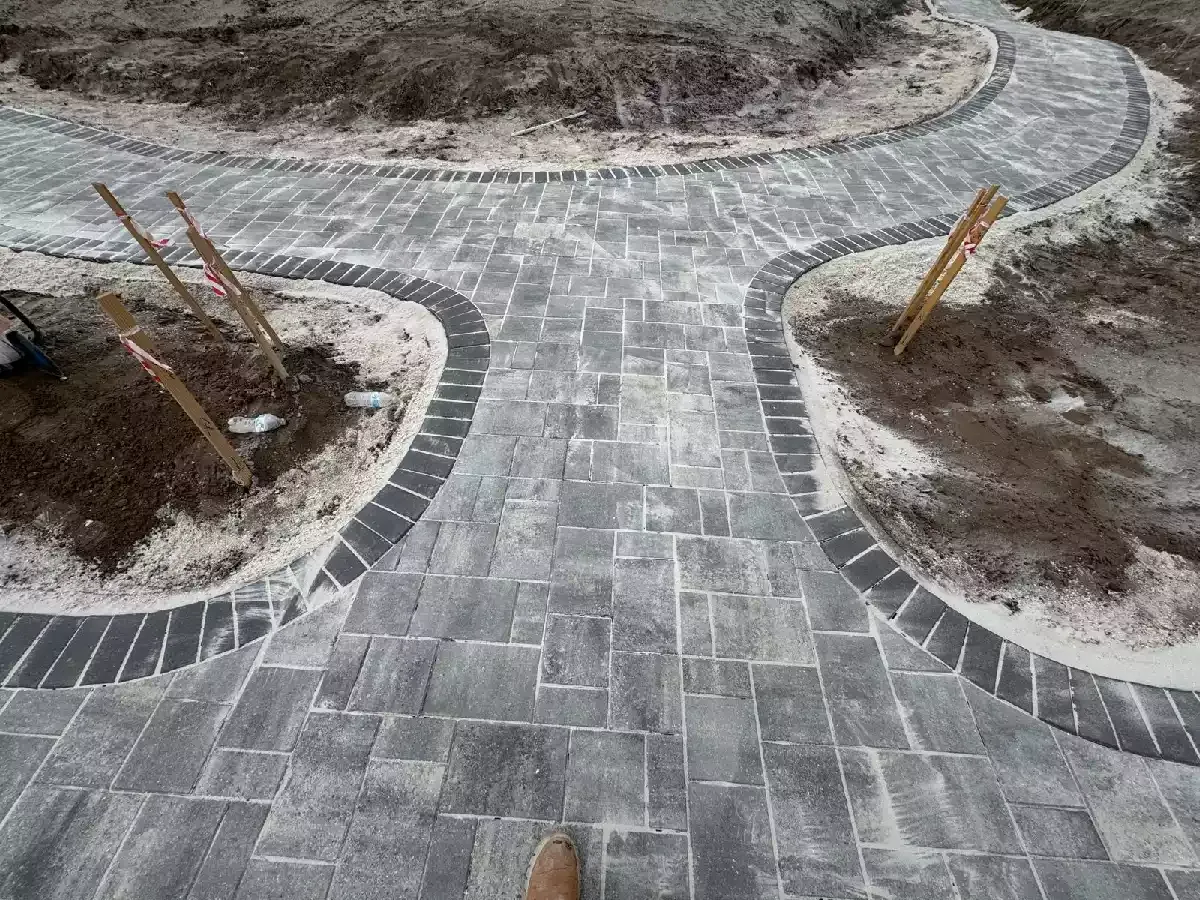
Installation is one of three things you can book here. If your surface already exists, one of these is probably the better fit.
Localized failure rarely needs a full replacement. See our paver repair and releveling service.
Cleaning, joint sand restoration, and sealer application are covered under paver sealing and maintenance.
An on-site evaluation sorts that out quickly. Request an evaluation and you get an honest read on which service your property needs.
Nothing gets quoted before someone sees your property, because the numbers move on things no satellite image will show. These are the factors that shift an estimate most:
The on-site evaluation is free, and the estimate that follows reflects what your site actually requires. Schedule an evaluation and you can walk it together.
Your installation follows this sequence. Nothing gets skipped to hit a schedule.
We assess existing conditions, drainage patterns, grade requirements, and what base preparation the location needs. Some locations, such as Venice Island, call for deeper subgrade preparation based on site conditions.
We go through layout, paver style, color, and pattern, and how the space will actually be used. Vehicle turning radius for driveways and furniture placement for patios get worked out here.
The work sequence, material quantities, and site-specific challenges get set before anything is dug. If your community has HOA requirements, we work within those guidelines.
Existing material is removed to the depth the complete base system and pavers require. This establishes the proper grade for drainage.
Base sand is placed and compacted to create a stable foundation, typically 2 inches of compacted base sand within a 4-inch total base system. Base depth is adjusted as needed for specific site conditions or load requirements.
Pavers are set in the planned pattern with tight joints, which is what creates the interlock that gives the surface its strength.
Precise cutting closes the field around structures, utilities, and curves so the finished edges look intentional rather than improvised.
Edge restraint locks the paver field in place and holds surface integrity under load. Without it, pavers gradually spread apart and the surface loses stability.
Masonry sand is swept into the joints to lock pavers in place while allowing future repairs.
We confirm drainage is working as planned and review the completed installation with you before the crew leaves.
Paver installation is an active construction process. Equipment, materials, and crew occupy the site while excavation, base work, and placement are underway, and access to the work area is limited during that time.
Timeline depends on project size and complexity. Weather affects scheduling, since base work cannot proceed effectively in wet conditions.
Concrete pavers handle Florida sun, temperature swings, rainfall, and humidity when they are installed with attention to drainage and base preparation. They resist thermal stress better than poured concrete, which commonly cracks.
Care is normal ownership rather than a constant project. Joint sand inspection as needed keeps the surface performing correctly, and maintenance frequency varies by use, exposure, and environment. Individual pavers can be lifted and reset if settling shows up in an isolated area.
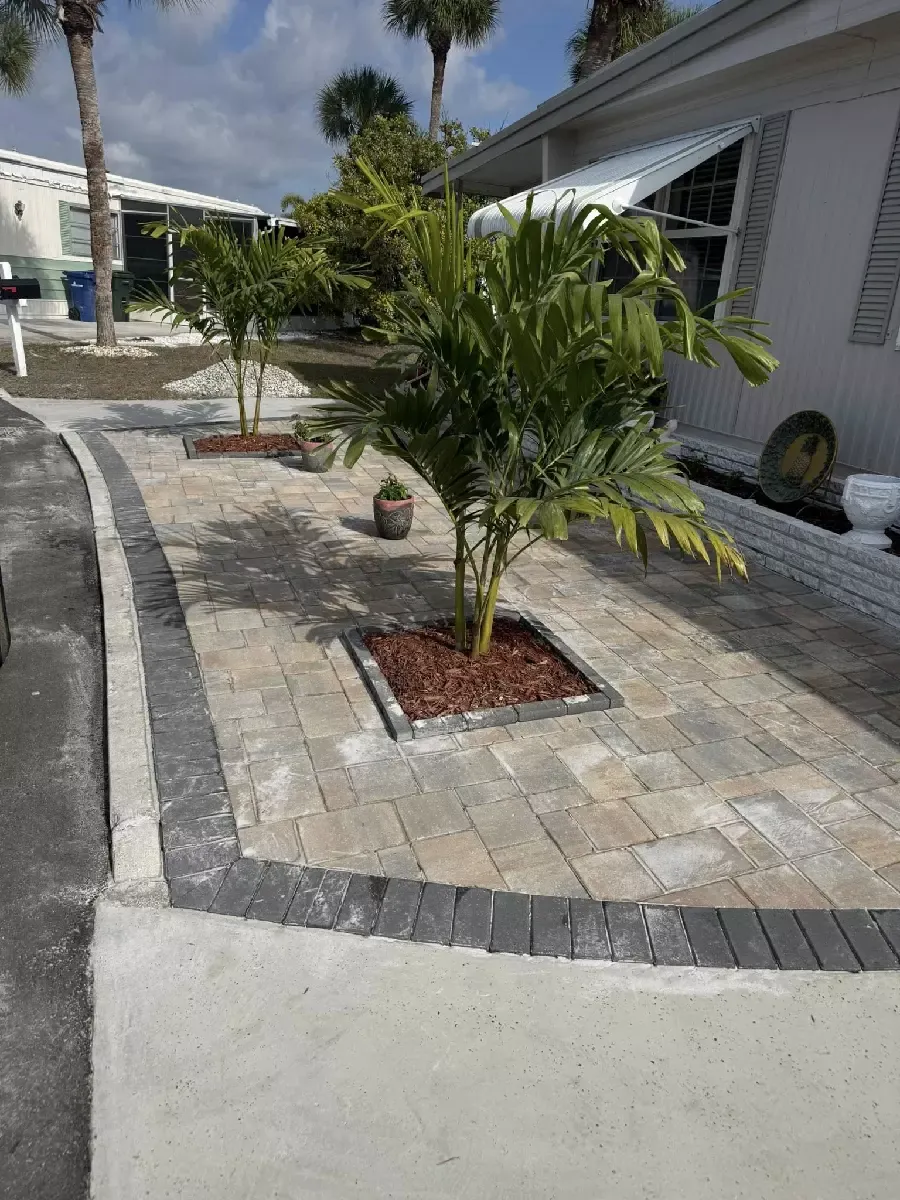
Properly installed concrete pavers last decades in this climate. Performance comes down to site conditions, traffic load, drainage, and routine care rather than the paver itself.
Pavers move with the ground instead of cracking across a slab, and individual units can be lifted and reset. That flexibility usually means longer service life and much simpler repairs than poured concrete.
Smaller residential projects are often finished in a few days. Larger driveways, commercial work, and jobs involving drainage or grading take longer. Heavy rain pauses work because proper compaction is not possible in wet conditions.
Settling comes from inadequate base preparation, poor drainage, or soil movement. Proper preparation minimizes the risk. If you already have a surface that has settled, our paver repair service corrects the cause rather than just resetting the pavers.
Yes. Individual units can be lifted and reset without replacing the surrounding surface, which is one of the practical advantages pavers have over a poured slab.
It is active construction. Equipment, materials, and crew occupy the site during excavation, base work, and placement, and access to the work area is limited while that is happening. We plan the sequence to keep disruption as short as possible.
Yes. We install within HOA guidelines in communities that have them. Property owners handle their community submission and approval process, and we provide the project detail needed for it.
All installations include a 2-year warranty covering settling and structural issues. If a warranty repair is completed, the warranty period resets.
Local experience with coastal soil, drainage requirements, and site-specific access challenges is what keeps installations planned correctly for this area. Pick your town for the neighborhoods covered and the questions that come up there:
Your installation starts with an on-site evaluation covering layout, drainage, and existing conditions. Send the details on your driveway, patio, pool deck, or commercial project and it goes on the calendar.