
Paver Repair and Releveling
Sunken sections, drifting edges, and standing water corrected at the cause, so you keep the surface you already paid for.
Where the water goes. Standing water that will not clear, a lot that slopes toward the house instead of away from it, and the grade that has to be right before any surface goes down on top of it.
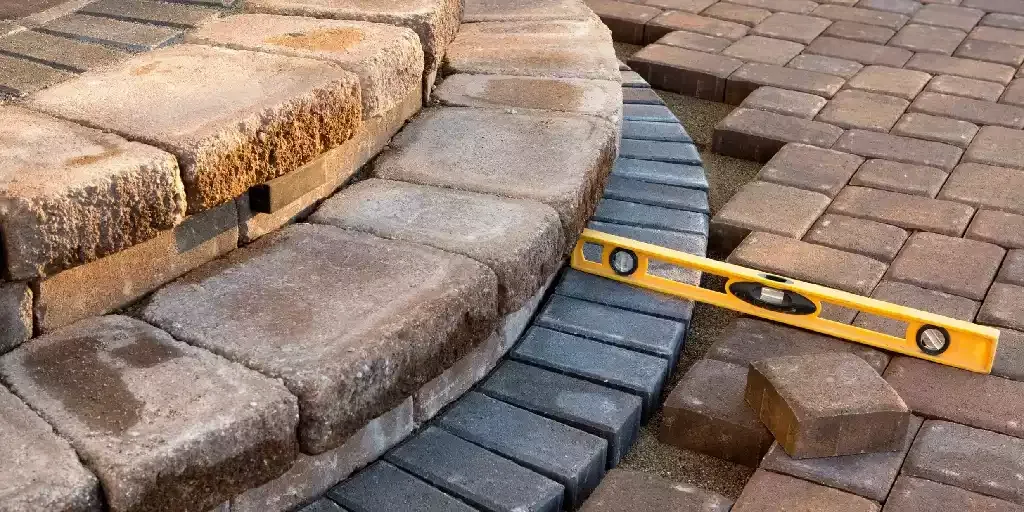
A large share of the repair calls we get are not really surface problems. A driveway that dropped, a patio that holds water, a lanai floor that went uneven. Underneath most of them is water that was never given anywhere to go.
Which is why fixing the surface alone is usually a way of paying for the same repair twice. If the grade is wrong, the new surface inherits the problem the old one had, just with a fresh invoice attached.
Send your address and where the water sits. Photos taken during a storm help more than anything. Your evaluation gets scheduled from there.
Standing water has two causes and they need different fixes. Either the ground does not slope enough to move water out of the area, or it slopes fine but the water arrives somewhere with no outlet and sits there.
The first is a grading job. The second is not solved by grading at all, and doing it anyway just relocates the puddle. Telling them apart takes standing on the property and reading what the ground is actually doing, which is why nothing here gets quoted from a photo.
The most useful thing you can do before the visit is take pictures during or right after a heavy rain. Where water sits, how deep, and how long it takes to clear tells us more in one photo than an hour of walking a dry lot.
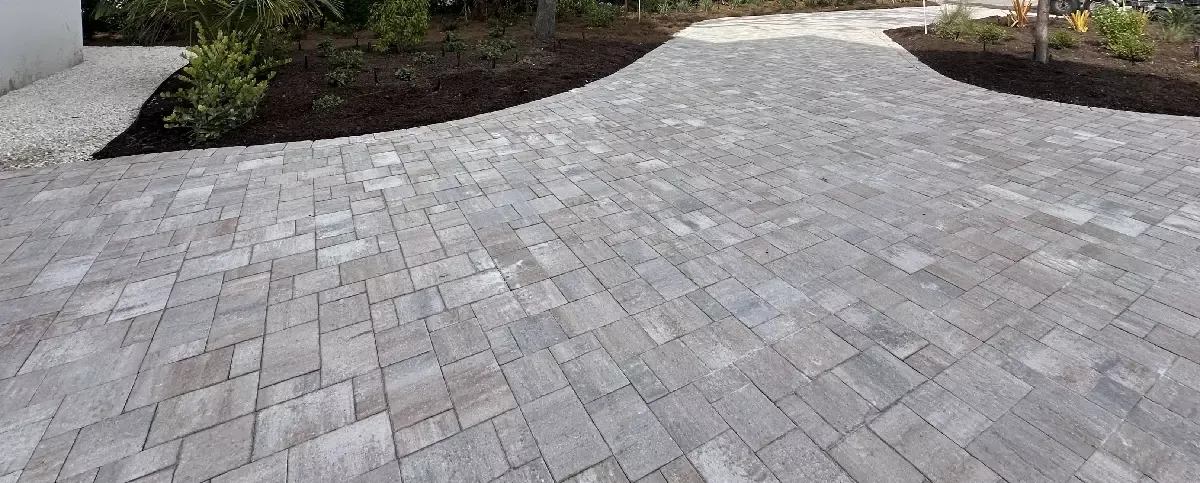
Book an evaluation and bring your storm photos. You will get an honest read on whether this is a grading job, an outlet job, or something that does not need work at all.
Usually. Standing water is either a grade problem, meaning the ground slopes the wrong way or not at all, or an outlet problem, meaning the water has nowhere to go once it gets there. Which one it is decides the fix, and that gets determined on site rather than guessed at.
Almost always because the grade was set wrong before it went down, or the surrounding ground has moved since. The pavers are rarely the cause. Correcting the grade is a different job than resetting the surface, and doing only the second one means you do it again later.
A shallow, shaped channel that moves surface water where you want it to go rather than where gravity currently takes it. It reads as part of the lawn rather than as drainage infrastructure, which is why it suits residential lots.
A raised, shaped area of soil. It can redirect water away from a structure, create separation and privacy, or give a flat lot some shape for planting. Often it and a swale are two halves of the same solution.
If your grade is wrong, yes. Building a surface on a lot that sheds water toward the house means building a very expensive way to move water toward your house. Grade is the first thing your site evaluation looks at for exactly that reason.
Worth looking at sooner rather than later. Water running at a structure is not a problem that improves on its own, and the cost of correcting grade is not related to how long you wait, but the cost of what the water does might be.
Where work requires one, permitting is handled as part of project management. Requirements differ between municipalities and unincorporated county, and your evaluation covers what your specific address needs.
A 2-year warranty covering settling and structural issues. If a warranty repair is completed, the warranty period resets.
The repairs bad grade causes, the surfaces that need it set correctly first, and the turf that will not fix it on its own.
Sunken sections, drifting edges, and standing water corrected at the cause, so you keep the surface you already paid for.
The base system, the process, and the warranty behind every surface we build. Start here if you want to know how the work is actually done.
Green year round with no mowing and no irrigation. The base and drainage underneath decide whether it stays that way.
Send your address and where the water sits. Photos taken during a storm are the most useful thing you can include. Requests get a response within one business day.