
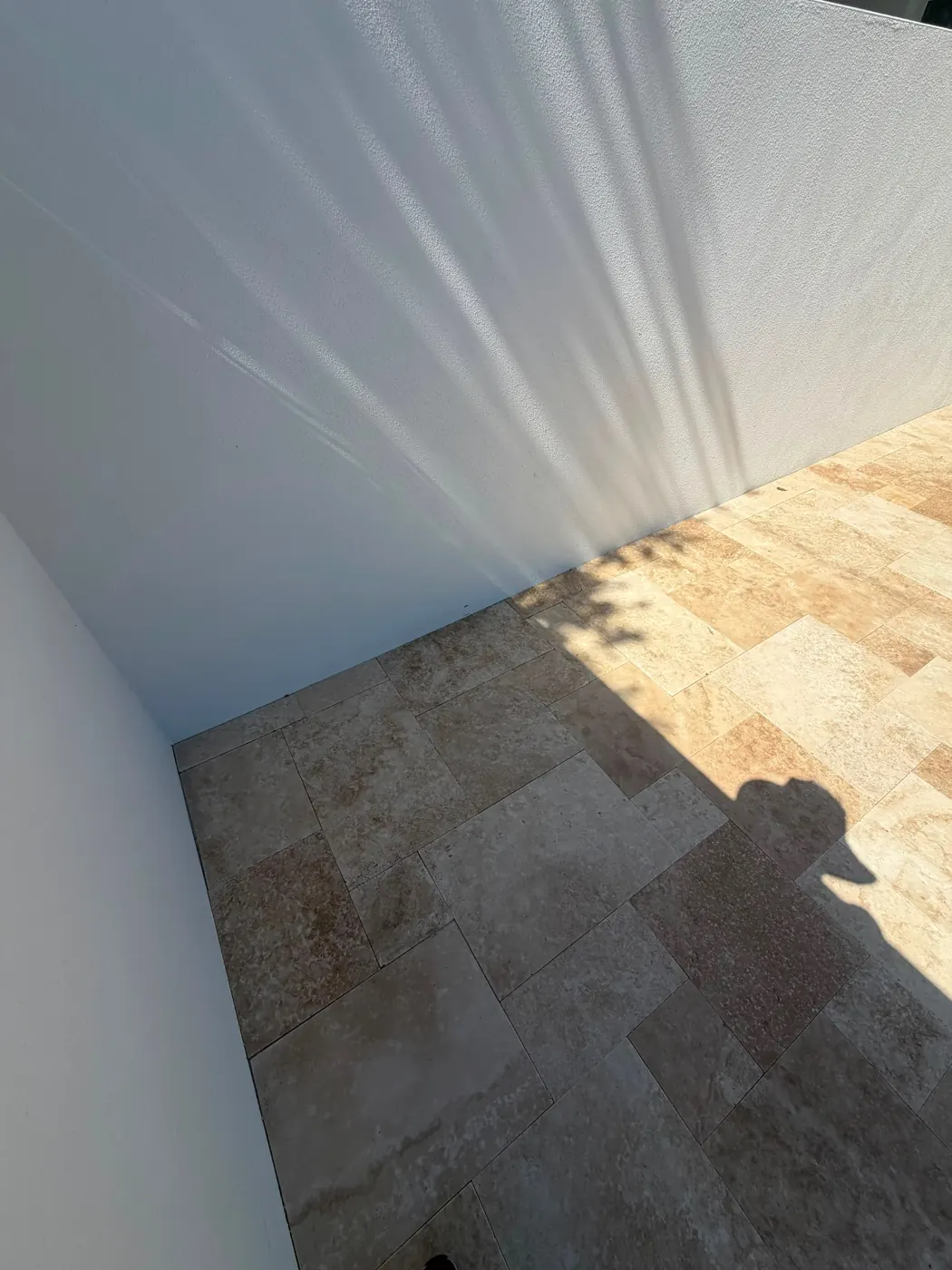
Close-up of the French-pattern tile mix, Venice
Natural stone rather than manufactured concrete. Different look, different feel underfoot in full sun, and a different price. Worth comparing properly before you commit, which is what this page is for.
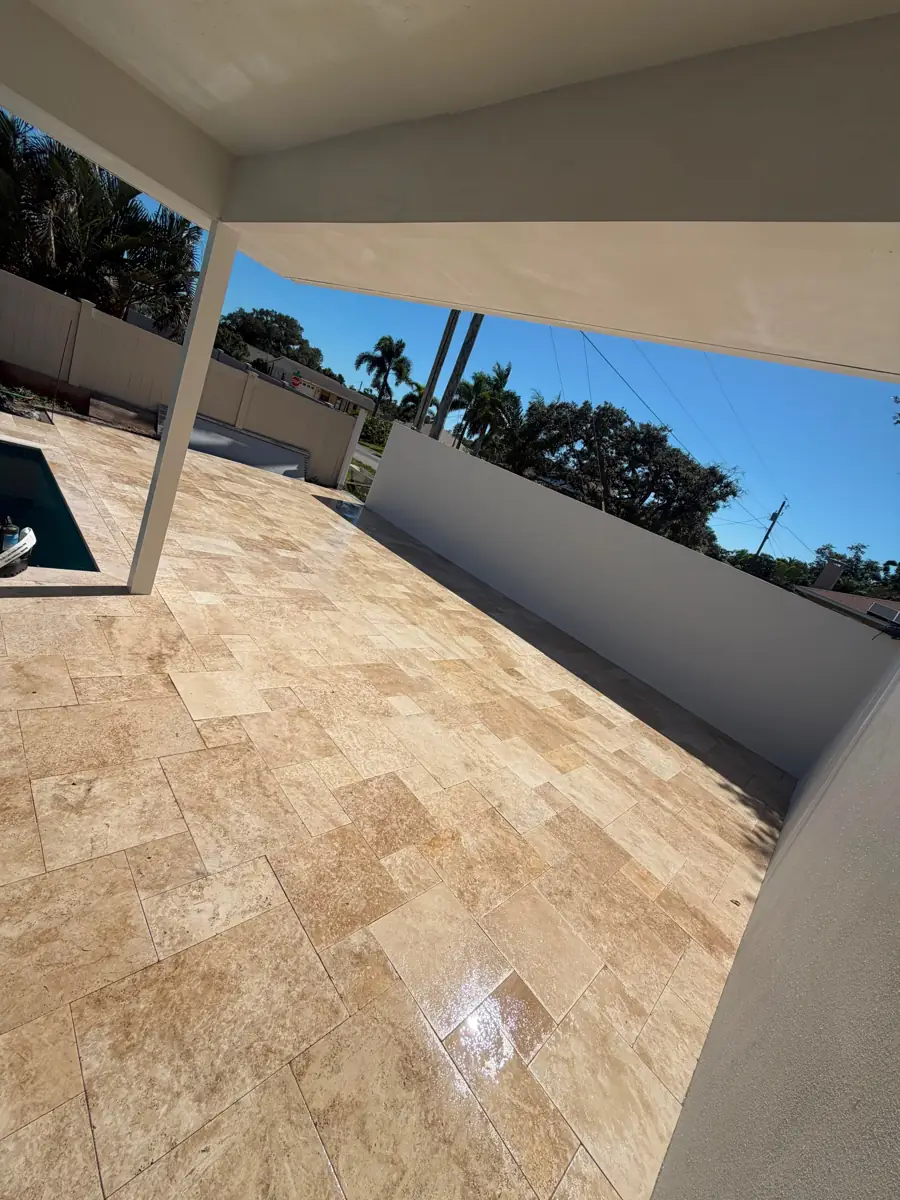
Travertine is quarried stone, so no two units are identical. That variation is the whole appeal, and it is also why a travertine field looks different in your yard than it did in a photograph of somebody else's.
Concrete pavers are manufactured, which buys you consistency, a far wider range of shapes, sizes, and colors, and a lower material cost. Neither is the better product in the abstract. They are different answers to different priorities.
Send your address and what you are planning. You get both options priced against your actual space.
| Consideration | Travertine | Concrete paver |
|---|---|---|
| Appearance | Natural variation, no two units alike | Consistent, uniform across the field |
| Feel in full sun | Generally cooler underfoot | Depends heavily on color, light units run cooler |
| Range of options | Narrower, limited by what is quarried | Wide range of shapes, sizes, and colors |
| Material cost | Higher, varies with grade and finish | Lower |
| Repairs | Individual units lift and reset | Individual units lift and reset |
| Most common uses | Pool decks, patios, walkways | Every surface including driveways |
The base system underneath is covered on the paver installation page, and your site evaluation confirms what your specific location needs either way.
The strongest case is a pool deck. It is the surface where bare feet and full sun meet, and the one where the look carries the most weight because it frames the water.
A rear patio attached to a house with stone or stucco detailing is the second common case, where a manufactured product can read slightly flat against the architecture and the natural variation does the opposite.
Where it is less obviously worth it is a large field with a tight budget, or a surface nobody stands on barefoot. If a light concrete paver gets you most of the way at meaningfully less cost, that is what you will be told during the evaluation.
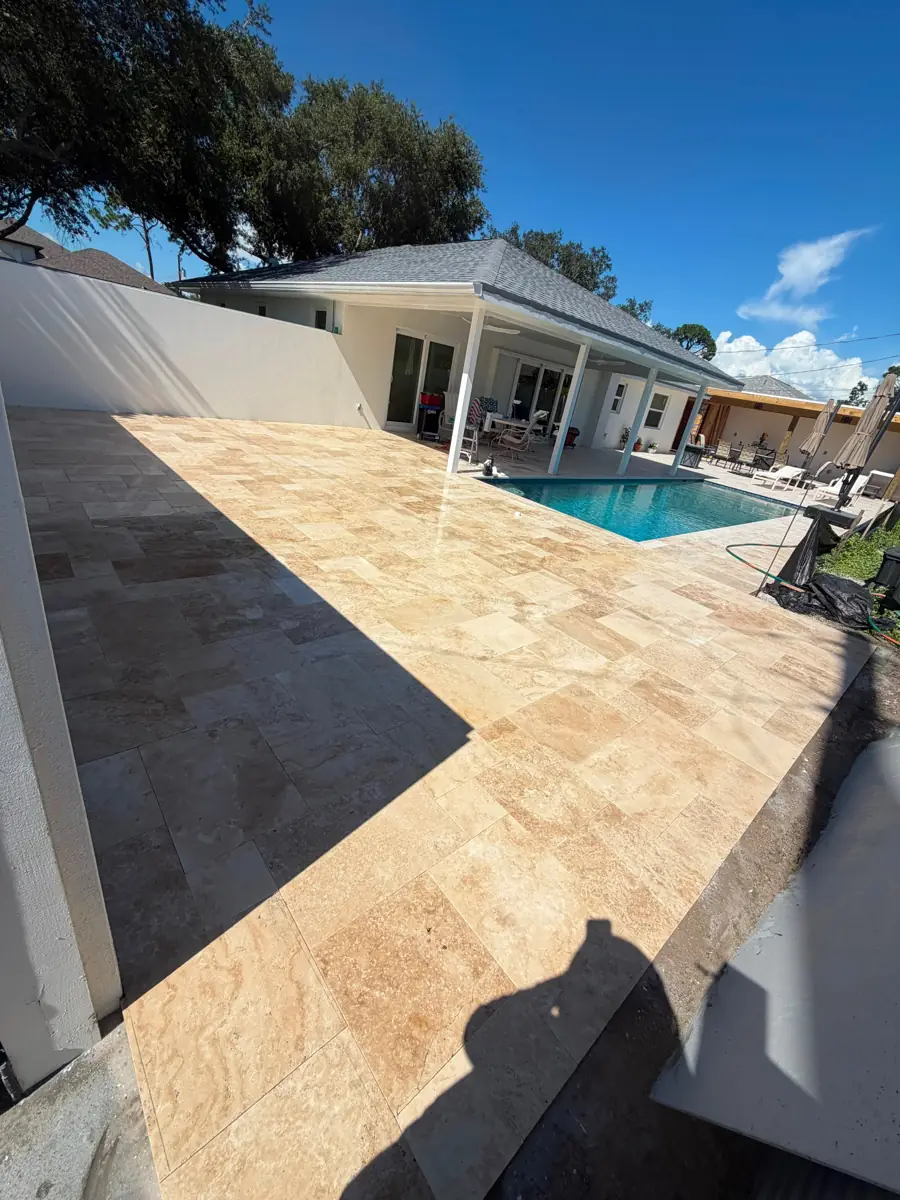
Close-up of the French-pattern tile mix, Venice
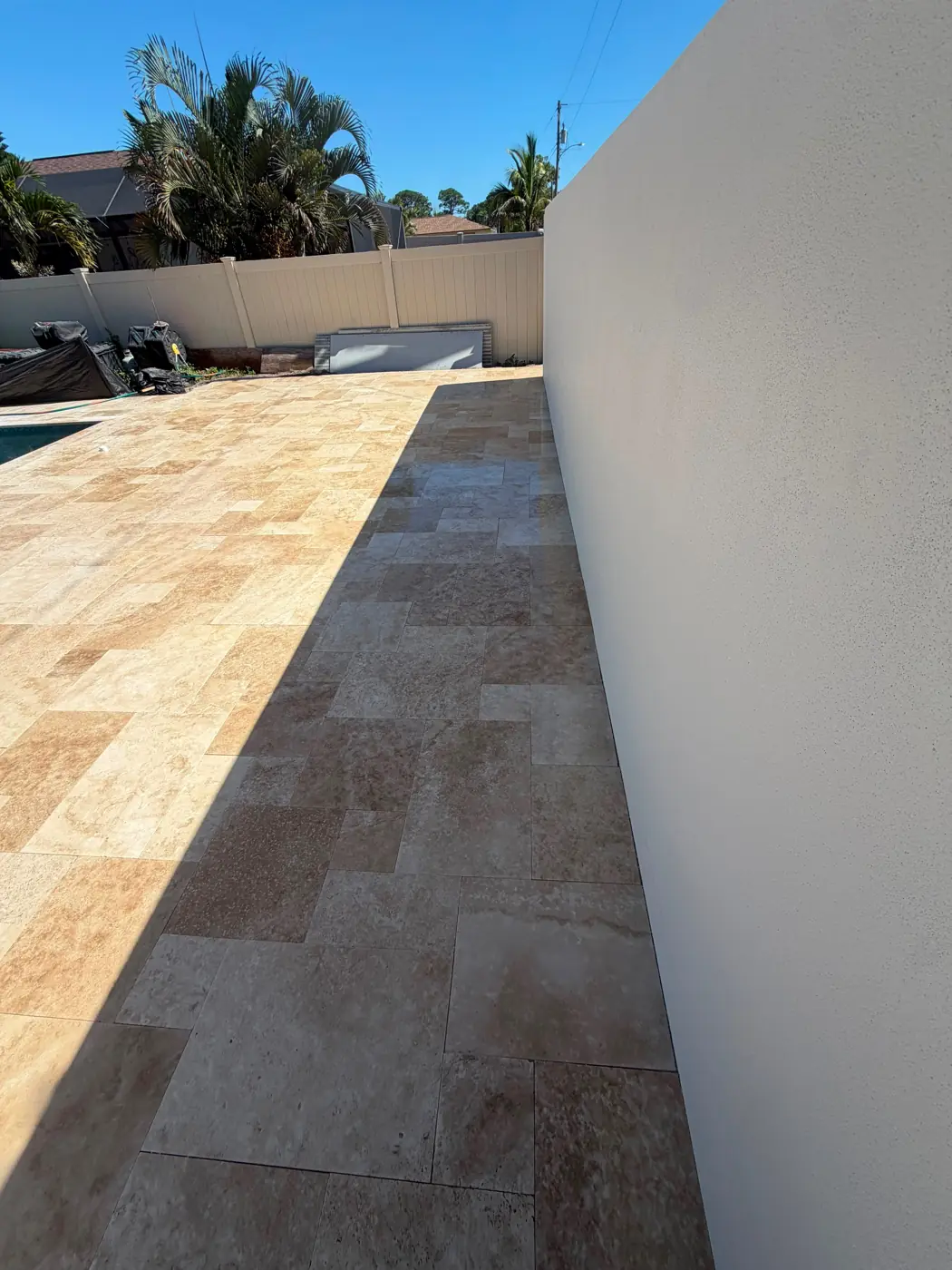
Travertine walkway running beside the pool deck, Venice
Travertine is quarried natural stone. Concrete pavers are manufactured. That means travertine varies unit to unit in tone and veining, which is the look people want it for, while concrete gives you consistency and a much wider range of shapes and colors.
It generally reads cooler in full sun than a dark concrete paver, which is the main reason it comes up for pool decks. Color still matters more than material alone, so a light concrete unit and a travertine unit are closer than a travertine and a dark concrete unit.
Material sits above concrete, and the gap varies with the grade and finish you choose. Where it lands on your project depends on square footage and how much cutting the layout needs. You get both priced against your actual space rather than a rule of thumb.
It is a natural stone with some porosity, so spills sit differently on it than on concrete. Cleaning and sealing are the usual answer, and the same maintenance framing applies as anywhere else: frequency varies by use, exposure, and environment. Our sealing and cleaning service covers it.
Pool decks, patios, and walkways are where it is most commonly specified. If you are considering it for a driveway, that is a conversation to have on site, because vehicle loading changes the calculation and it is worth being told plainly whether it suits your situation.
Yes. That advantage is not exclusive to concrete. Individual units can be lifted and reset without disturbing what surrounds them, which is why a stained or damaged piece is a small repair rather than a resurfacing job.
Yes. Travertine suits some properties and some budgets and not others. If the look you are after is achievable in concrete at a lower cost, you will hear that during the evaluation instead of after the invoice.
The two surfaces it is most often chosen for, and how the base system works underneath either material.
Bare feet, constant moisture, and full sun. Surface texture, color and heat, coping, and drainage away from the house.
Sizing the space around real furniture, tying it to the house, and getting the threshold transition right so the patio does not sit a step off.
The base system, the process, and the warranty behind every surface we build. Start here if you want to know how the work is actually done.
Send your address and what you are planning. You get both options against your actual square footage, plus a straight opinion on which suits the property.